AI has quickly evolved from a conceptual talking point into a very real operational priority across the wealth and investing landscape.
AI has quickly evolved from a conceptual talking point into a very real operational priority across the wealth and investing landscape. As Doug Scott recently wrote in Forbes, the real opportunity is not just in the technology itself, but in how firms apply it to improve workflows, reduce manual friction, and reclaim critical time.
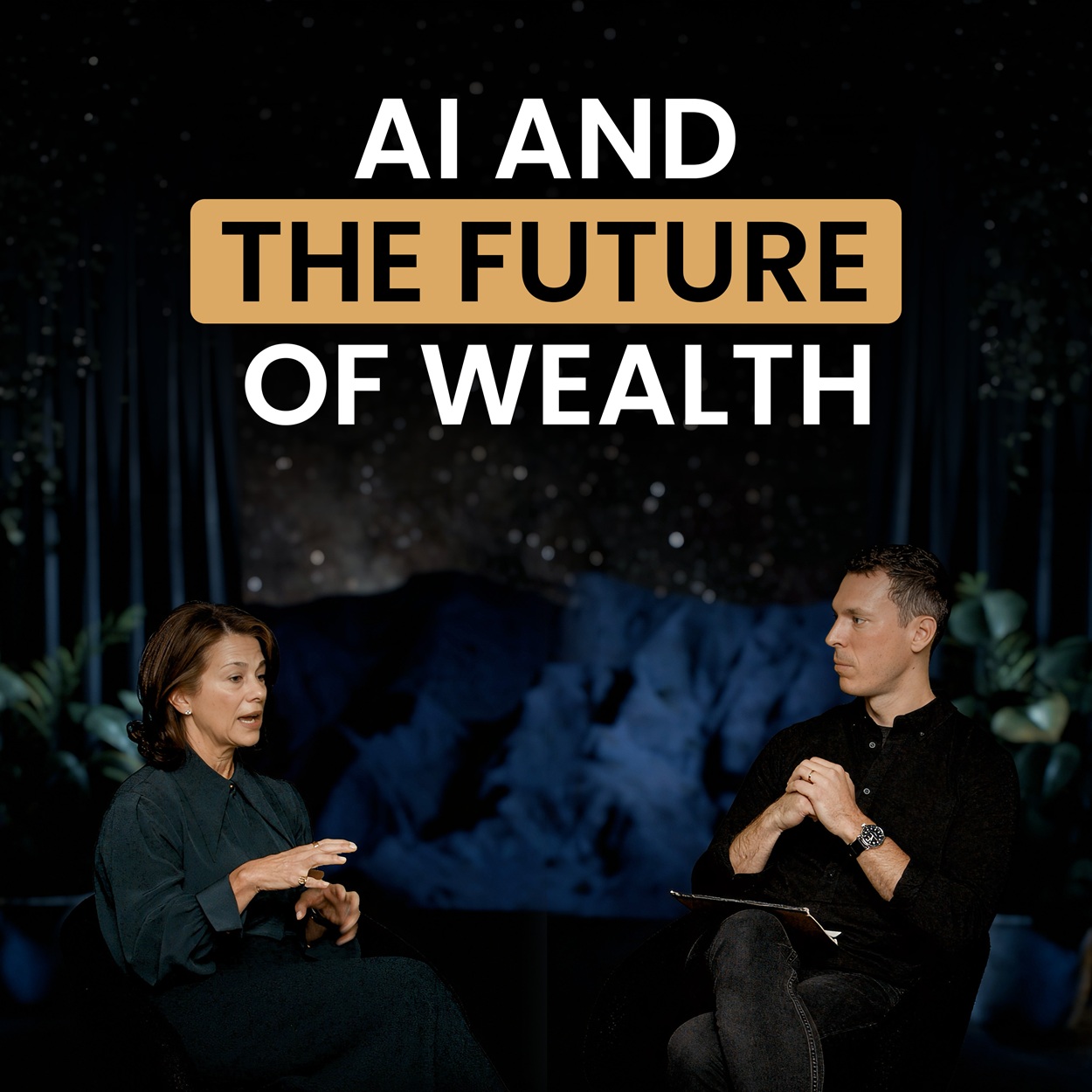
In this special compilation episode of Work Ethic, Ethic CEO Doug Scott brings together insights from five season one guests to provide an up-close look at exactly how top leaders in wealth are thinking about AI and navigating its impact on the future of investing.
1. Adam Katz on Inventing Hours
Adam Katz, partner and head of the founder and entrepreneur group at Corient, argues that one of AI’s primary utilities is its ability to invent hours for busy advisory teams. By executing low-value operations—such as monitoring client coverage, capturing meeting notes, and auto-populating CRMs while teams sleep—AI software agents maximize an advisor’s capacity for the work that really matters, like deeper client engagement.
Katz notes that advisors focused on high-touch, individualized client conversations will see AI as a massive operational differentiator that frees up team members to focus on higher-value tasks.
2. Kelly Coffey on Leveraging AI to Create a Centralized Data Layer
Kelly Coffey, co-founder of Verita Strategic Wealth Partners, points to one of the biggest advantages of building a firm from scratch today: no legacy tech stack to work around. In her view, one of the biggest operational problems in wealth management is that client information often lives across too many disconnected systems, making it hard for advisors to get a full picture quickly.
Her team is trying to solve that by building what she describes as an AI interface layer across the firm’s systems, along with a more intentional approach to data ownership and access. The broader point is an important one for advisors: AI is most powerful when it sits on top of clean, connected, reliable information. Without that foundation, even strong tools will struggle to deliver their full value.
3. Gary Hirschberg on AI as an Efficiency Engine for High-Touch Practices
Gary Hirschberg, Founder and CEO of Aaron Wealth Advisors, sees AI as likely to be more disruptive in scalable parts of the advisory market and more additive in highly personal, high-touch, personalized advice businesses. In the ultra-high-net-worth world, he argues, the human element is too important and the client needs are too complex for AI to replace the advisor.
Where AI can help, in his view, is in speeding up the supporting work. He points to in-house due diligence as one example: tools that help teams gather, organize, and process information faster can make firms more efficient while still leaving the final judgment where it belongs — with people.
4. Ron Albahary on removing low-value work from investment teams
Ron Albahary, CIO of LNW, offers one of the most operationally concrete examples in the episode. He describes wealth management as a business full of labor-intensive work, where too much time can be spent turning ideas into reports, documents, and other forms of communication. That creates a constant challenge for investment leaders: how to reduce low-value work and free analysts up for higher-value thinking.
His team’s response was to move away from an older research repository and toward an AI-enabled tool that lets both investment and client service teams query years of research more directly. The significance here isn’t just about speed, it’s that information becomes easier to access, easier to reuse, and easier to turn into something useful for clients.
5. Tripp Friedler on connecting siloed systems
Tripp Friedler, co-founder and managing partner of Free Gulliver, focuses on a problem many firms know well: too many systems that do not speak to one another. In the multi-family office world especially, accounting, reporting, CRM, and alternative asset systems often sit in separate silos, forcing teams to spend too much time stitching information together by hand.
Friedler’s view is that AI can help bridge those silos and reduce the manual work that gets in the way of better thinking. His metaphor is a good one: better technology does not replace talent any more than a better tennis racket replaces a good swing. It simply expands what a talented person can do.
AI wins by freeing up time for the human side of wealth management
Taken together, these five perspectives point to a useful conclusion. The most immediate value of AI in wealth management is better use of time, better access to information, and less energy spent on work that should no longer be as manual as it is.
For advisors and firm leaders, that may be the most practical takeaway: the firms that benefit most from AI are likely to be the ones using it to strengthen the human side of managing wealth.
What’s a Rich Text element?
The rich text element allows you to create and format headings, paragraphs, blockquotes, images, and video all in one place instead of having to add and format them individually. Just double-click and easily create content.
Static and dynamic content editing
A rich text element can be used with static or dynamic content. For static content, just drop it into any page and begin editing. For dynamic content, add a rich text field to any collection and then connect a rich text element to that field in the settings panel. Voila!
How to customize formatting for each rich text
Headings, paragraphs, blockquotes, figures, images, and figure captions can all be styled after a class is added to the rich text element using the "When inside of" nested selector system.




.png)
Ethic Inc. is a Registered Investment Adviser located in New York, NY. Registration of an investment adviser does not imply any level of skill or training. Information pertaining to Ethic Inc’s registration or to obtain a copy of Ethic Inc.’s current written disclosure statement discussing Ethic Inc.’s business operations, services and fees is available on the SEC’s Investment Adviser Public Information website – www.adviserinfo.sec.gov or from Ethic Inc. upon written request at support@ethicinvesting.com. Information provided herein is for informational purposes only and does not intend to make an offer or solicitation for the sale or purchase of any specific securities, investments, or investment strategies. Any subsequent, direct communication by Ethic Inc. with a prospective client shall be conducted by a representative of Ethic Inc. that is either registered or qualifies for an exemption or exclusion from registration in the state where a prospective client resides. Information contained herein may be carefully compiled from third-party sources that Ethic Inc. believes to be reliable, but Ethic Inc. cannot guarantee the accuracy of any third-party information.
Ethic Inc. does not render any legal, accounting, or tax advice. Ethic Inc. recommends all investors seek the services of competent professionals in any of the aforementioned areas. Ethic Inc. cannot provide any assurances that any investment strategies, simulations, etc. will perform as described in our materials. ALL INVESTMENTS INVOLVE RISK, ARE NOT GUARANTEED, AND MAY LOSE VALUE. BE SURE TO FIRST CONSULT WITH A QUALIFIED FINANCIAL ADVISER AND/OR TAX PROFESSIONAL BEFORE IMPLEMENTING ANY STRATEGY.